
How Store Design Can Increase Charity Shop Donations
The relationship between environment, donor confidence and the quality of donations.
Store design influences more than sales
The design of a charity shop affects far more than how products are displayed.
It shapes how customers perceive the organisation, how volunteers experience the space and how confident donors feel about giving their items to the charity.
A well-considered retail environment can encourage people to donate more often, improve the quality of donations received and strengthen the relationship between the shop and its local community.
First impressions build donor confidence
People form an impression of a shop within moments of arriving.
A clean, organised and welcoming environment communicates that donations will be valued, handled carefully and presented thoughtfully.
When a shop feels well managed, donors are more likely to trust that their items will be used effectively to support the charity’s work.
That trust can influence both the frequency and quality of future donations.
Make the donation experience simple
Donating should feel easy and welcoming.
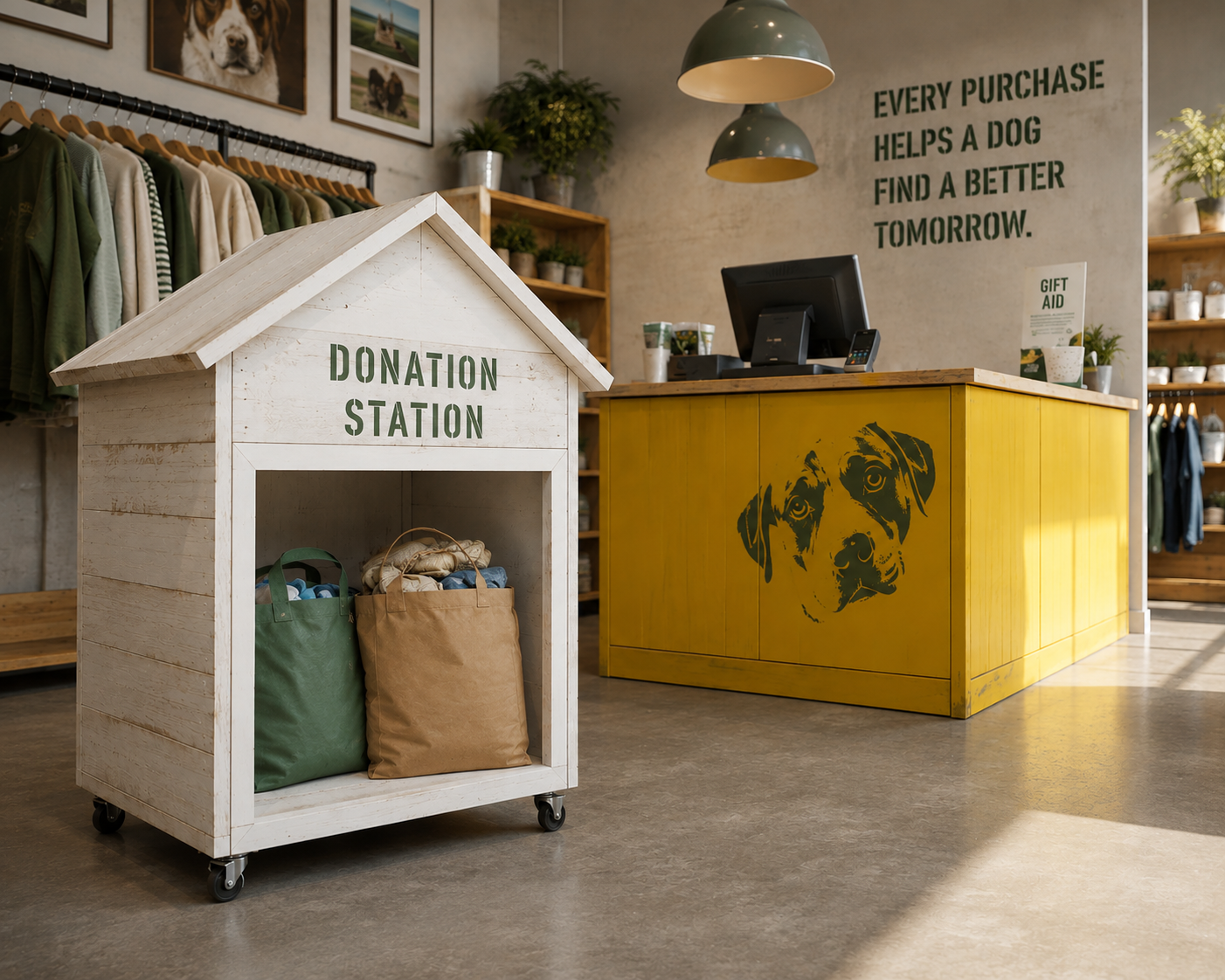
Clear signage, visible donation points and an uncomplicated handover process reduce friction and make supporters more likely to return.
The donation journey should be considered as carefully as the customer journey. Donors need to understand where to go, who to speak to and what will happen to their items.
Even small improvements can make the experience feel more professional and reassuring.
Better presentation strengthens perceived value
The way donated products are displayed affects how customers and donors value them.
Thoughtful merchandising, good lighting and clear product categories help donated items feel desirable rather than disposable.
When supporters see donations presented with care, they gain confidence that the charity will make the most of the items they provide.
That perception can encourage donors to offer better-quality products and consider the charity first when clearing their homes or wardrobes.
Design for the people receiving donations
Volunteers and shop teams play an essential role in the donation experience.
The layout should support them with practical processing areas, appropriate storage and clear routes between the donation point, back-of-house space and shop floor.
When the environment works operationally, teams can welcome donors more confidently and process stock more effectively.
A better experience for volunteers often creates a better experience for donors.
Create a shop people want to return to
Successful charity shops become part of their communities.
Memorable interiors, flexible displays and regularly changing product stories give people a reason to visit more often.
Customers may return to shop, but they also return to donate.
A strong retail environment helps keep the charity visible and relevant, creating an ongoing relationship rather than a single transaction.
Connect the space to the charity’s purpose
A charity shop should communicate more than what is for sale.
Its mission, impact and local relevance should be visible within the environment.
Clear storytelling can help donors understand how their contributions support the cause and why their items matter.
When people can see the connection between donating and impact, the experience becomes more meaningful.
Final Thoughts
Store design has the power to influence much more than the appearance of a charity shop.
Thoughtful retail environments build confidence, improve the donation experience, support volunteers and encourage stronger relationships with local communities.
The aim is not simply to create a more attractive shop. It is to create a place where people feel confident that their donations will be valued and used effectively.
When strategy, design and operational thinking work together, the retail environment can help generate better donations, stronger engagement and more sustainable income for the charity.
About THE CCC
The Charity Concept Consultancy (THE CCC) helps charities create commercially stronger retail environments through strategy, concept development, store design and project delivery.
Whether you are reviewing a single shop, planning a refurbishment programme or transforming an entire retail estate, every recommendation is practical, commercially focused and tailored to your organisation.
No two charities are the same. Neither are our solutions.
