
Creating Charity Shops People Love to Visit
The principles behind creating welcoming retail environments that encourage customers to browse, return and support your cause.
Introduction
Successful charity retail isn't just about attracting donations—it's about creating places people genuinely enjoy visiting.
Today's best charity shops compete for attention alongside national retailers, independent boutiques and online shopping. Customers expect bright, organised and inspiring spaces regardless of whether they're shopping for fashion, books or homeware.
Fortunately, creating a shop that people want to return to doesn't always require a large budget. Many of the biggest improvements come from thoughtful planning, clear merchandising and understanding how customers experience your space.
First Impressions Matter
Customers make assumptions within seconds of arriving.
Ask yourself:
Can people immediately understand what your shop sells?
Is the entrance open and inviting?
Can shoppers see interesting products from outside?
Does the shop feel bright and well maintained?
An inviting entrance encourages people to cross the threshold.
Make Navigation Easy
Customers shouldn't have to work to understand your shop.
Good layouts:
create clear pathways
define departments
avoid clutter
encourage exploration
naturally guide customers through the entire store
When customers feel comfortable, they spend longer browsing.
Merchandise Like a Retailer
Successful charity retailers don't simply display products—they curate them.
Simple improvements include:
colour blocking clothing
creating lifestyle displays
grouping complementary products
keeping fixtures tidy
refreshing displays regularly
Presentation increases perceived value.
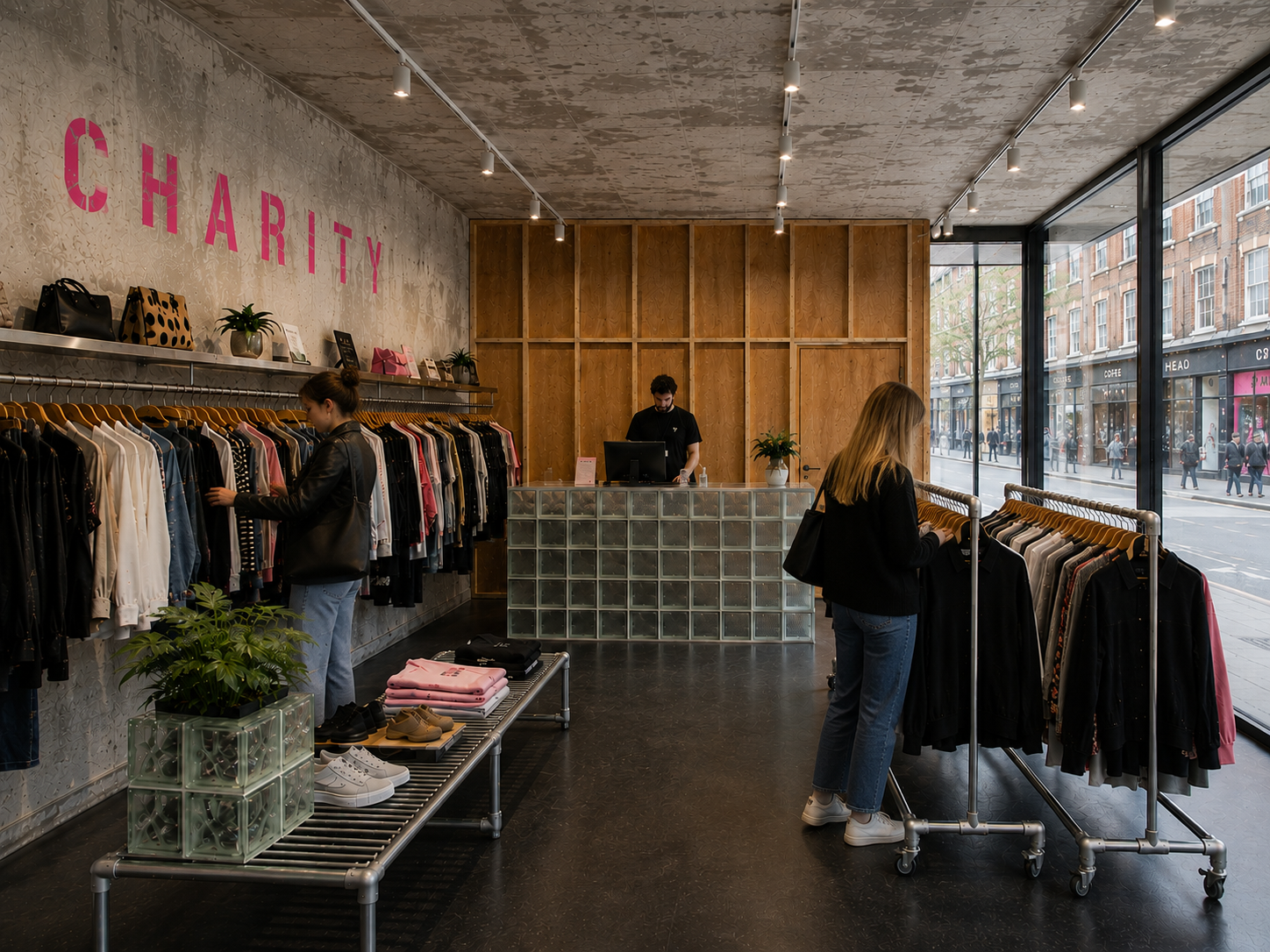
Think About Comfort
Customers stay longer when shops feel pleasant.
Consider:
lighting
sightlines
changing rooms
seating
music
accessibility
cleanliness
Every detail contributes to the overall experience.
Design Builds Trust
Good retail environments communicate professionalism.
When customers trust a charity retailer, they're more likely to:
purchase
donate
volunteer
recommend the shop
return again
Store design influences far more than sales.
Final Thoughts
The best charity shops don't rely on expensive fixtures or large budgets. They succeed because every part of the customer journey has been considered—from the first impression at the entrance to the final interaction at the till.
Creating spaces people genuinely enjoy visiting strengthens fundraising, encourages repeat customers and builds lasting relationships with your local community.
About THE CCC
THE CCC helps charities create commercially stronger retail environments through strategy, concept development, refurbishment planning and project delivery.
Whether you're reviewing a single shop or transforming an entire estate, every recommendation is practical, commercially focused and tailored to your organisation.
