
IKEA Is Launching a Second-Hand Marketplace. What Could It Mean for Charity Furniture Retail?
For decades, charity retail has been one of the most visible examples of the circular economy in action.
Furniture is donated because its original owner no longer needs it. A charity gives it a second life, another customer takes it home, and the value that might otherwise have been lost generates income for a cause. It is a remarkably simple model, and one that mainstream retail is increasingly embracing.
IKEA is preparing to launch its peer-to-peer second-hand marketplace in the UK, allowing IKEA Family members to buy and sell pre-owned IKEA products directly to one another. The platform has already been introduced in a number of European markets and puts IKEA into a resale space occupied by established platforms such as eBay and Vinted.
From a sustainability perspective, there is a lot to celebrate. More furniture remaining in use for longer is a good thing. More consumers considering pre-owned furniture before automatically buying new is a good thing too. And one of the world's largest furniture brands actively encouraging customers to recognise that its products can have a useful life beyond their first owner is significant.
But for charity furniture retailers, it also raises a much bigger question: what happens when one of the world's biggest furniture brands makes reselling unwanted furniture feel completely normal?
Because the potential impact of IKEA's move may extend far beyond IKEA.
IKEA isn't suddenly moving into second-hand
This distinction is important.
IKEA already participates in the second-hand economy through initiatives that extend the useful life of its products. What is particularly interesting about this development is that IKEA is creating the infrastructure for its customers to buy and sell pre-owned products directly between themselves.
Rather than IKEA simply taking back an item and subsequently reselling it, the new marketplace facilitates a relationship between one IKEA customer and another. In existing versions of the marketplace, IKEA can make that process easier by supplying product information and suggested pricing, further reducing the effort involved in putting an unwanted piece of furniture back into circulation.
It is a clever proposition because IKEA isn't simply finding another route through which used furniture can be sold. It is creating an ecosystem in which an IKEA product can move from one owner to another while the brand remains part of the relationship.
That puts the development into territory occupied by businesses such as eBay and Vinted, and that is where it becomes particularly interesting for charity retail.
The sustainability argument
There is no reason for charity retailers to view this negatively from an environmental perspective.
Furniture is bulky, resource-intensive and capable of remaining useful for considerably longer than its first ownership. Anything that makes it easier for a perfectly usable table, bookcase, wardrobe or chair to find another owner rather than being discarded should be welcomed.
In fact, IKEA's move reinforces an idea that charity retail has been demonstrating for generations: an item doesn't cease to have value simply because its original owner no longer wants it.
The more mainstream that idea becomes, the larger the potential audience for all forms of second-hand retail becomes too. Someone who becomes comfortable buying a pre-owned IKEA cabinet may subsequently become more comfortable buying a second-hand sofa, a dining table or an antique chest. They may ultimately become the customer who walks into a charity furniture shop and discovers something they hadn't even considered buying.
The normalisation of second-hand isn't inherently a threat to charity retail. It has the potential to expand the market considerably.
But it also changes it.
The bigger impact isn't necessarily IKEA furniture
It would be easy for a charity furniture retailer to look at this announcement and conclude that it isn't particularly significant.
IKEA furniture is readily available new, relatively affordable and may not always represent the most valuable furniture donation entering a charity shop. Losing the occasional IKEA bookcase or cabinet to a peer-to-peer marketplace is unlikely, on its own, to transform the economics of a furniture operation.
But focusing on the product risks missing the bigger point.
The significance may not be the furniture being sold on the platform. It is the behaviour the platform could help normalise.
If IKEA makes selling used furniture easier, more visible and more mainstream, consumers may begin to reconsider the value of furniture they previously regarded simply as something they needed to get rid of.
Someone replacing a cabinet might previously have asked who could collect it or where they could donate it. Increasingly, they may first consider whether it has a resale value and whether selling it is worth the effort.
Once that behaviour becomes established, there is no obvious reason it should stop with IKEA furniture. A customer who becomes accustomed to checking the resale value of an IKEA cabinet today may be more likely to investigate the value of a sofa, dining table, vintage sideboard or designer chair tomorrow.
That is where the development becomes particularly interesting for charity retail.
Removing the friction from furniture resale
Furniture has traditionally been more difficult to resell than clothing, accessories or smaller household items.
A piece needs to be photographed properly, measured, described and priced. The seller has to find someone who wants that particular item, often within a realistic geographical distance, and then both parties have to work out how a large and sometimes extremely heavy object gets from one home to another.
That inconvenience has arguably worked in charity retail's favour.
For somebody clearing a home, moving house or replacing several pieces of furniture, a charity capable of arranging collection can offer something extremely valuable: convenience. The owner doesn't necessarily have to establish what everything is worth, list each piece individually, communicate with several potential buyers and coordinate multiple collections. Donating can simply be the easier option.
But technology has a habit of removing friction from transactions that once felt inconvenient.
The more straightforward platforms make the process of valuing, listing, finding a buyer and completing a transaction, the less inconvenience stands between “I don't want this anymore” and “I could make some money from this.”
That may sound like a relatively small psychological shift, but for retailers whose supply is largely dependent on people choosing to give away items that still have value, it could be an important one.
We've already seen what happens when resale becomes easy
Fashion perhaps gives us the clearest indication of how consumer behaviour can change when the barriers to resale are reduced.
eBay has allowed people to sell unwanted possessions for decades, while Vinted has made the process feel particularly accessible to a new generation of sellers. The important change isn't simply that more people are comfortable buying second-hand; it is that consumers have become increasingly accustomed to recognising the residual value of the things they already own.
A wardrobe clear-out that might once have resulted in several bags going directly to a charity shop can now begin with a decision about what to sell and what to donate. Items with obvious brands, desirable labels or stronger perceived values can be separated out and listed online before the remainder reaches the donation bag.
It would be far too simplistic to attribute changes in the quality of charity donations solely to eBay, Vinted or any other resale platform. Consumer buying habits, fast fashion, product quality, economic pressures and many other factors influence what ultimately reaches a charity shop.
Nevertheless, the underlying behavioural change is difficult to ignore. Consumers have far more information about what their possessions might be worth and far more accessible ways of realising that value themselves.
IKEA's marketplace raises the possibility that this same psychology could become increasingly established around furniture.
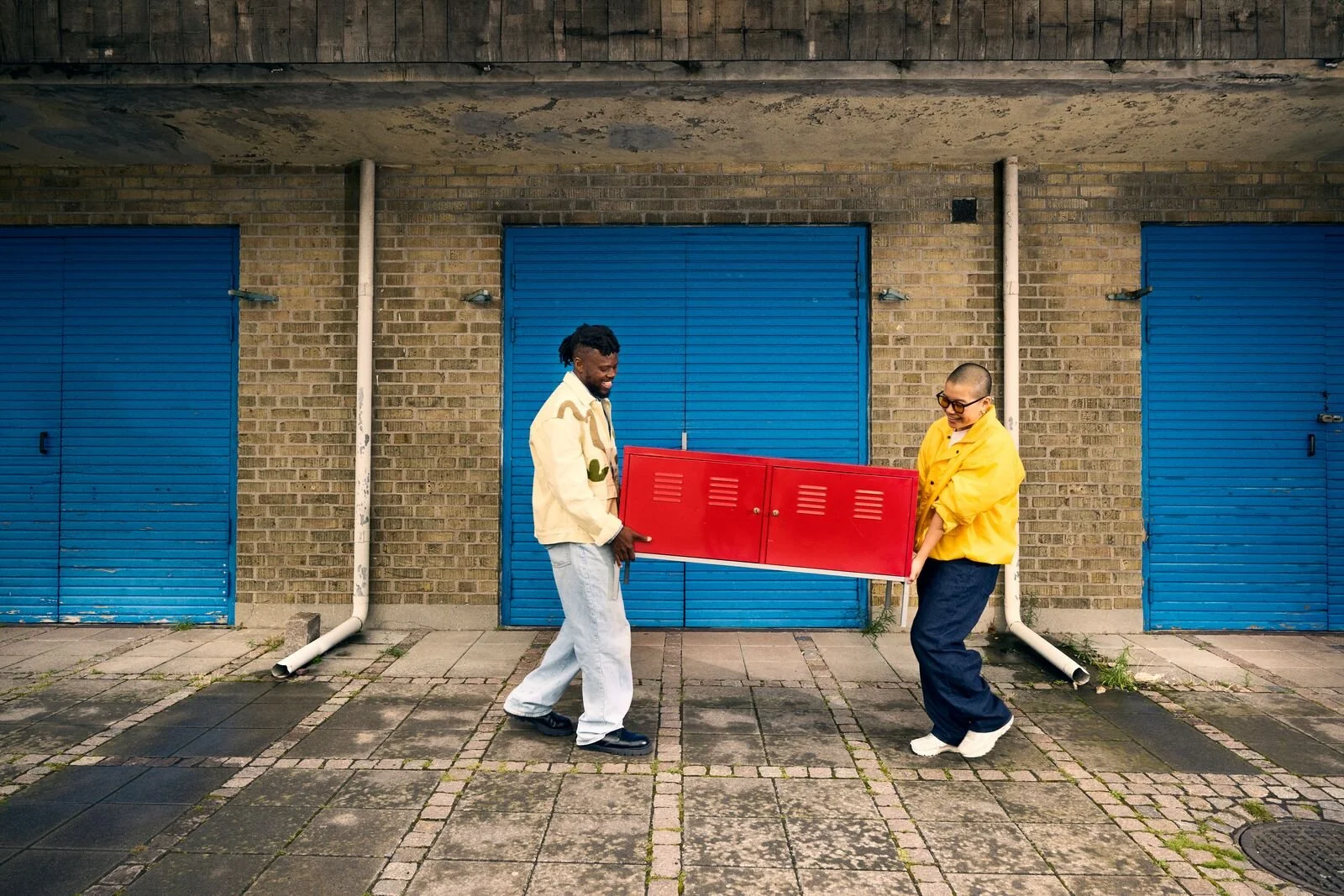
Credit: Ikea
Charity retail is increasingly competing for the donation
Retail competition is normally discussed in terms of customers: where will somebody choose to spend their money?
Charity retail has another market operating alongside it, because it also needs to consider where people choose to give their unwanted possessions.
A furniture shop can have a great location, strong footfall and plenty of potential customers, but its proposition ultimately depends on receiving furniture worth selling. If consumers have an increasing number of convenient ways to monetise their unwanted possessions, attracting good-quality donations becomes an increasingly important part of the commercial equation.
That doesn't mean people will suddenly stop donating furniture. Donation is driven by many motivations, from convenience and a desire to avoid waste to generosity and a genuine connection with a particular cause. For many people, knowing that an unwanted possession can generate income for an organisation they care about is reason enough to donate it rather than sell it themselves.
Those motivations are powerful, but charities shouldn't necessarily assume they will always win by default. If selling becomes easier, the case for donating needs to remain compelling.
The cause is a competitive advantage
This is where charity retail has something extraordinarily powerful.
A peer-to-peer marketplace primarily creates value for the buyer and the seller. A charity donation has the potential to create value for somebody entirely removed from the transaction.
A dining table that is no longer needed can help fund hospice care. A sofa can contribute towards homelessness services. A wardrobe might support medical research or a chest of drawers could generate income for animal welfare. The relationship will naturally differ between organisations, but the principle remains the same.
The donor isn't simply giving away furniture; they're giving the charity an asset from which it can generate value for its cause.
That creates a very different proposition from selling something online and keeping the proceeds. As competition for good-quality second-hand product increases, charities may need to become better at communicating that distinction and demonstrating what the value of a furniture donation can actually make possible.
There is a considerable difference between asking the public to “donate your unwanted furniture” and helping them understand the potential value that furniture could create once it enters the charity's retail operation.
Online resale has changed the value question too
The growth of online marketplaces doesn't only affect where people choose to dispose of their unwanted possessions. It has also made the value of second-hand goods far more transparent.
A customer looking at a branded chair, cabinet, coat or handbag can search for comparable items before they have even left the shop. They can see what other sellers are asking, compare condition and decide very quickly whether the charity's price represents good value.
That creates an interesting tension for charity retailers. Understandably, a charity wants to maximise the value of every donation. If something has been given freely and its sale supports the cause, achieving another £10, £20 or £50 from it appears inherently positive.
But the value of a donation isn't necessarily the highest price that can be written on its ticket; it is the value that can successfully be realised from it.
A piece of furniture priced at £150 that occupies valuable floor space for three months isn't automatically creating more value than the same item selling promptly for £100 and allowing that space to be replenished with another donation. There is a relationship between price, stock turn, available space, customer perception and market value that becomes particularly important with bulky products.
Ironically, the same marketplaces creating greater competition can also provide useful market intelligence. They give charity retailers greater visibility of what comparable products are being offered for, the amount of choice available to customers and, where reliable sold-price information exists, what the market may actually be prepared to pay.
The opportunity isn't necessarily to price lower. It is to price more intelligently.
The physical shop still matters enormously
If online marketplaces become increasingly good at making second-hand furniture convenient, where does that leave the physical charity furniture shop? Potentially, in a very strong position.
Furniture is a particularly tactile purchase. Customers often want to see an item properly, understand its scale, inspect its condition, open drawers, sit on a sofa or simply get a sense of whether it will work in their home. A physical shop provides all of this immediately, but perhaps its greater advantage is the opportunity for discovery.
Someone searching online for a particular IKEA cabinet will probably find exactly that. Walk into a charity furniture shop looking for a cabinet, however, and you might leave having discovered a 1970s sideboard you didn't know you wanted.
That unpredictability is one of the greatest assets of second-hand retail. No mainstream furniture retailer could realistically manufacture the assortment that charity retail receives naturally. Contemporary furniture can sit alongside vintage pieces, mass-market products alongside handmade items, and an inexpensive bedside table alongside something genuinely collectible. Every delivery has the potential to change the offer.
The challenge is ensuring that this unpredictability feels like discovery rather than disorder.

Credit: Ikea
Charity furniture shops have an opportunity to become more inspiring
This is perhaps where the IKEA announcement becomes most relevant to the future of the physical charity furniture shop.
Many charity furniture stores are necessarily large and practical spaces, but functionality can too easily become the entire proposition. Furniture is accommodated wherever it fits, sofas form rows, dining tables are pushed together and wardrobes line the perimeter. The customer may be presented with a huge amount of stock, yet receive very little inspiration for how any of it could look in their own home.
That matters because presentation influences perception, and perception influences value.
A sideboard positioned against a bare wall under uninspiring lighting can easily look like something somebody no longer wanted. Present the same sideboard as part of a considered setting, perhaps with a lamp, mirror, artwork and a small selection of complementary homeware, and the customer's perception can change considerably. The product itself hasn't changed, but the context in which it is being experienced has.
Mainstream furniture retailers have understood this for decades. Room settings aren't simply decorative; they help customers imagine products as part of their own lives.
Charity furniture retail arguably has an even greater opportunity because its stock is unique. Instead of recreating identical room sets across hundreds of stores, a charity can use the constantly changing nature of donations to create environments that feel genuinely individual, eclectic and worth returning to.
The environment can add value to the donation
This is why the response to an evolving second-hand market shouldn't simply be about competing on price or making donation collection more efficient.
There is an opportunity to reconsider the concept of the charity furniture shop itself and the role the environment can play in creating value.
A more considered retail concept can help an eclectic product mix feel intentional without removing the spontaneity that makes second-hand shopping enjoyable. Better zoning can make large spaces easier to navigate, while thoughtful lighting, merchandising and room settings can help customers understand the potential of individual pieces. Smaller homewares can become part of the furniture presentation rather than existing as an entirely separate category, and windows can showcase the strongest donations in a way that gives customers a reason to stop and enter.
The charity's purpose can also become part of that environment. Sustainability, reuse and the impact of the eventual purchase don't have to exist only on a poster near the till; they can be woven into the wider concept and help customers understand why choosing charity creates value beyond the item they're taking home.
None of this changes the fundamental economics of donated furniture. What it changes is the context in which that furniture is seen, and context can have a considerable influence on perceived value.
A growing second-hand market also means a growing audience
The growth of resale shouldn't only be interpreted as increased competition. It is also creating more second-hand customers.
Someone who becomes accustomed to buying pre-owned clothing online has already crossed an important psychological barrier: they are comfortable owning something that somebody else owned first. As that behaviour extends into homeware and furniture, the potential audience for charity furniture retail becomes broader too.
The challenge is convincing those customers that the charity furniture shop is somewhere worth exploring.
That creates an opportunity to think more expansively about who these stores are designed for. The audience doesn't need to be limited to customers seeking furniture primarily because it is inexpensive. It can include interiors-conscious shoppers, renters furnishing their first home, students, collectors, people actively seeking vintage pieces, consumers motivated by sustainability and those who simply enjoy the possibility of finding something they wouldn't encounter in a conventional furniture store.
In many cases, the stock capable of attracting those customers may already be arriving through the donation door. The question is whether the environment, presentation and communication surrounding it allow customers to recognise its potential.
So what does IKEA's marketplace really mean for charity retail?
Probably not that charity shops will suddenly stop receiving IKEA furniture, and certainly not that charity furniture retail faces an existential threat from another resale marketplace.
The more interesting consequence is behavioural.
One of the world's largest furniture retailers is putting its weight behind the idea that furniture retains value after its first owner. In doing so, IKEA is helping make resale easier, putting furniture circularity further into the mainstream conversation and potentially giving consumers another reason to pause before automatically donating an unwanted piece of furniture.
That could create greater competition for some donations and contribute to increasingly transparent second-hand pricing, but the same cultural shift also expands the audience for pre-owned furniture.
For charity retailers, those two developments should be considered together. The challenge is to remain compelling to the person deciding whether to donate an item, while creating a retail proposition strong enough to attract the increasingly sophisticated customer who wants to buy it.
Final thoughts
Charity retail was circular long before circular retail became a mainstream retail strategy, and that history gives the sector a strong position from which to respond to a changing second-hand market. It should be celebrated, but it shouldn't create complacency.
Consumers are becoming more conscious of the residual value of the things they own, resale platforms are becoming easier to use and major brands are finding ways to remain involved with products beyond their first purchase. IKEA's marketplace is another development in that evolution, but it also brings further attention to furniture circularity at precisely the moment when charity retailers have an opportunity to reconsider their own furniture offer.
Rather than viewing that development defensively, this could be the time to look again at how charity furniture shops are conceived and experienced. More considered concept design, stronger merchandising and more inspiring environments can help increase the perceived value of donated furniture, while clearer storytelling can reinforce the connection between reuse, the purchase and the cause. Together, those elements can help transform a furniture shop from somewhere customers visit primarily because they need an affordable item into somewhere they actively want to browse, discover and return to.
The future of furniture is becoming increasingly circular, but charity retail has occupied that space for decades. The opportunity now isn't simply to remind customers of that fact, but to create a furniture retail experience that feels every bit as relevant and exciting as the conversation happening around it.
