
Designing Charity Shops That Reflect Your Brand
Why every retail environment should communicate the purpose, personality and values of your charity.
A charity shop is often the most visible representation of an organisation within its local community.
For many supporters, volunteers and customers, the retail environment is far more familiar than a charity's headquarters or offices. It is where people donate, volunteer, shop and engage with the cause on a regular basis. The experience they have inside that shop shapes how they perceive the charity as a whole.
Despite this, many charity shops still look remarkably similar. Generic fixtures, inconsistent signage and outdated interiors can make it difficult for supporters to understand what makes one organisation different from another.
Strong charity retail design should do much more than display products. It should tell the story of the organisation behind the shop.
Whether you're designing a modern hospice retail environment, refreshing a cancer charity shop or creating a premium fashion concept for an animal welfare organisation, every design decision should reinforce the charity's identity and strengthen the connection between the customer and the cause.
Every Charity Has a Different Story
No two charities exist for the same purpose, so their retail environments shouldn't look the same.
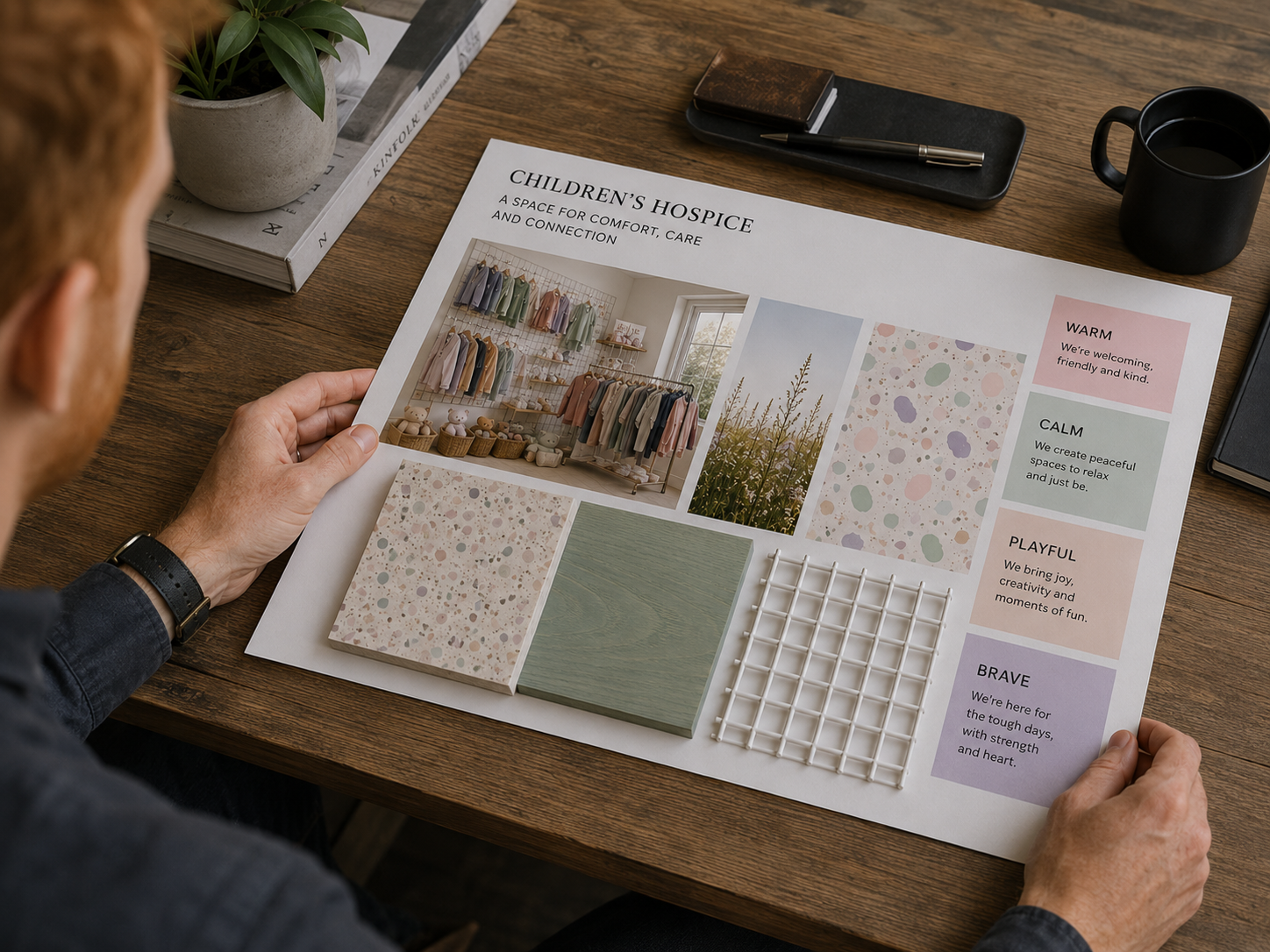
A hospice charity may wish to create calm, welcoming spaces that reflect compassion and dignity. An animal welfare charity might focus on community, warmth and optimism, while a health charity may prioritise trust, professionalism and accessibility.
Retail design provides an opportunity to express these qualities without relying on excessive branding or messaging.
Instead, colours, materials, lighting, signage, merchandising and layout can work together to create an environment that feels authentic to the organisation.
When customers recognise that a shop has its own identity, the experience becomes more memorable and meaningful.
Design Creates Emotional Connections
People rarely support charities for practical reasons alone.
They support organisations because they believe in the cause, identify with the mission or have a personal connection to the work being carried out.
Retail environments should reinforce those emotional connections.
Thoughtfully designed spaces can create feelings of trust, optimism, comfort and confidence. Small details—from the welcome at the entrance to the quality of displays and the organisation of departments—contribute to the overall perception of the charity.
When the physical environment reflects the values of the organisation, customers are more likely to return, donate again and recommend the shop to others.
Consistency Builds Recognition
Many charities operate multiple shops across towns, cities or entire regions.
While every location has its own character, supporters should still recognise the charity's retail identity wherever they visit.
Consistent signage, materials, merchandising principles and customer experiences help build familiarity across an estate without creating identical shops.
This balance between consistency and local flexibility is one of the foundations of successful retail concept design.
Great Design Supports Commercial Performance
Brand-led design is often viewed as an aesthetic exercise.
In reality, it directly supports commercial performance.
Clear customer journeys encourage browsing. Attractive displays increase perceived value. Organised departments improve shopping confidence, while flexible layouts make it easier for teams to respond to seasonal trading and changing stock.
The most successful charity retail concepts combine strong branding with practical operational thinking.
Good design should never come at the expense of functionality.
Looking Beyond Today's Refurbishment
A refurbishment should not simply solve today's challenges.
It should create a retail concept capable of supporting future growth.
As customer expectations evolve and charities expand their retail operations, stores need to remain adaptable while continuing to represent the organisation effectively.
Developing a strong retail identity today creates a foundation that can be applied consistently across future refurbishments, new shop openings and estate-wide investment programmes.
Final Thoughts
The most successful charity shops don't simply display a logo above the door. They communicate the purpose, personality and values of the organisation through every aspect of the customer experience.
When retail environments genuinely reflect the charity behind them, they become more memorable, inspire greater confidence and create stronger relationships with supporters, volunteers and local communities.
Thoughtful design doesn't just strengthen a shop—it strengthens the charity's presence within the communities it serves.
About THE CCC
THE CCC helps charities develop distinctive retail concepts that combine commercial performance with meaningful customer experiences. From concept development and brand-led store design to refurbishment planning and project delivery, every solution is tailored to the organisation's objectives, identity and long-term retail strategy.
